
The Abominable Bride Review
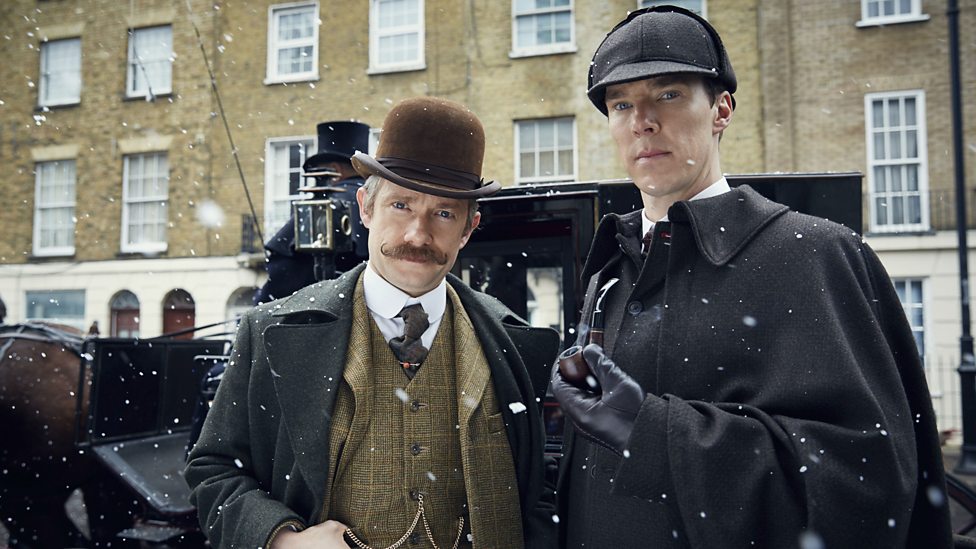 Well that was odd.
I’ve pointed out numerous times that Moffat’s default mode of storytelling is based on suspense over what kind of story he’s telling. With The Abominable Bride he substitutes this, with mixed results, for suspense over what the point of telling it is. This was always going to be a factor; you can’t pick up from a stunning cliffhanger with a one-off period special and not offer some meta-commentary on why. But it would have been possible to offer the answer “because it’s fun” and gotten on with it. And for the most part that’s what they do.
And yet the larger show hangs over it from the start, with the decision to do an extended recap of the series instead of just tearing into a big silly Victorian romp. The implication that this is going to advance the overall story of Sherlock is omnipresent. Which is where problems start to come up, because it doesn’t really. Which is hardly surprising; Series Four needs its hook. But the result is that a perfectly entertaining period piece about a murderous cult of suffragettes (that’s emphatically in favor of them, to be clear) gets bogged down with a bunch of Killing Joke level hero/villain mirroring.
It’s tempting to try to make this some sort of frock/gun point, and the iconography is literally there, but it’s weirder than that. On the whole, The Abominable Bride’s main instinct is to be a silly compendium of all the iconic Sherlock Holmes moments, done as a proper period piece but with the Sherlock cast. And so it goes out of its way to get the Reichenbach Falls and the first meeting in, makes sure to find room for everyone to make a cameo, visibly can’t get Laura Pulver’s schedule to work, et cetera. Sure, the only way they can justify Reichenbach is by doing the whole silly Inception business and banal mirroring, but the basic instinct is still “whee we’re putting Rupert Graves in mutton chops.”
Except then it’s got the whole addiction theme layered in, which it can’t come close to supporting. The focus on Mycroft’s heartbroken anguish at his brother’s overdose, played with career-best acting by Gatiss, is really a quite serious reframing of Sherlock’s narrative. I mean, obviously that’s in part the point – we’re clearly setting up a “Sherlock is very much living on the edge” plot, as follows necessarily from His Last Vow. And in that regard, the spectre of Nicholas Meyere’s The Seven Per-Cent Solution is not accidental.
But quite apart from how much I like that development, and much of that depends on who’s writing the opening episode of Series Four, it’s an awkward fit with the Victorian costume party. (To say nothing of an awfully sobering one for New Year’s Day, though that’s actually powerful and compelling.) And the result ends up undermining the whole endeavor, feeling as though they didn’t really believe their period piece could stand up on its own.
But if we’re being honest, it’s a mixed bag on whether it can.…
 In Warren Ellis’s 2013 novella Dead Pig Collector the protagonist, Mister Sun, describes his job in terms of the title phrase, explaining that in China (“a place rife with pollution and disease”) pig farmers often face large-scale deaths of pigs due to the aforementioned pollution and disease, which presents a major challenge. “A small farm – and, in places like Shanghai, they’re all small farms – cannot spend what little time they have disposing of tons of dead pigs instead of maintaining their remaining assets.” And since the penalties for selling such pigs into the market are steep, “there are people who have learned to effectively and safely dispose of swine carcasses. If you have a stack of dead pigs, and you don’t want to go to prison, then you pay for a dead pig collector.” As Mister Sun explains all of this, he is pouring bleach through a pair of holes cut into a plastic sheet laid over a bathtub in order to break down the blood within. Mr. Sun, see, is a hit man specializing in the efficient and untraceable disposal of the resulting corpse.
 The comedian Richard Herring has a Christmas story he tells about a thirsty cat in a bathroom. He was sitting on the toilet and reached across to turn the bath tap on for the cat, which then lapped enthusiastically at the water. He says he found the sight hilarious, but imagines that the cat also had quite an amusing view… though, as he goes on to observe, Jesus had the funniest view, getting the combined sights of the drinking cat and the “fat, defecating man”. Because, as Christianity teaches us, Jesus is always watching.
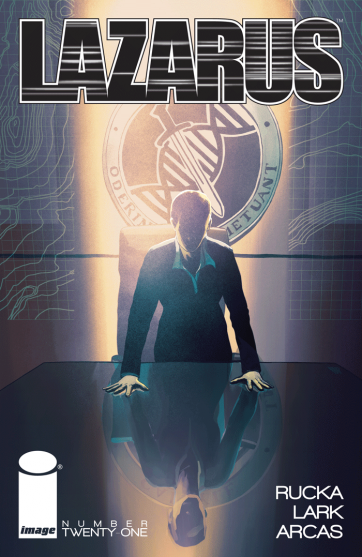 A surprising Marvel-free week.
 Right. Loads of stuff. First off, just a heads up, I’m bumping Last War in Albion one more week because I decided I don’t want to launch a new chapter on a holiday and then drop a Sherlock review on top of it later in the day. There’ll still be Friday morning content though.
 We’ll start with the stories ranking, with letter grades assigned, and then finish with some general thoughts on the season.