
“…rose from a solid sea”: Timescape

A river, flowing to eternity. Frozen.
But even when frozen, water does not stand still. There is movement and kinetic energy at the molecular level, imperceptible though it might be to normal human senses. Water’s mercurial nature is in its ability to remain fluid throughout many different forms.
In the depths of space, due to the extreme temperatures, water does not solidify into the crystalline lattice commonly associated with ice, but ice still exists. It is still freezing. In space, ice forms as an amorphous solid, transitioning in an instant to a kind of cosmic glass. Amorphous ice is likely the most common form of water in the universe.
On Earth, a lake frozen over in winter appears still and silent as the world around it appears locked in suspended animation. But beneath the surface, life goes on: Some fish, such as trout, are actually *more* active during the winter, while many species of insect spend their larval stages underwater during the winter in temperatures that can average a balmy 1-4 degrees Celsius in places. Winter is not a finite cessation of life, but a part of the continuing cycle of life.
There are events still in motion even as the world seems to sleep, setting the stage for the inevitable spring. And so the cycle begins again.
There are few stories that have become so much a part of my being and existence as “Timescape”. Rewatching it the other night reminded me why. There are some episodes of Star Trek: The Next Generation that instantly come to mind when I think of the series-I’ve already mentioned “The Chase” is one this season. “Timescape” is not one of those episodes. It’s in a category beyond that, existing only as a vivid sensory memory. When I think of Star Trek: The Next Generation, I don’t think of this *story*, I think of its *images*: The Enterprise locked in combat with a Romulan Warbird. The eerily silent dreamlike atmosphere of the ship itself as she and her crew remain suspended in the unfolding moment. Deanna Troi making her way through a frozen sickbay, visibly astonished at the sight of Doctor Crusher in the midst of being crippled by a disruptor blast. Those images have lingered in the back of my psyche as clear as they were on first transmission for over twenty years.
Not so much Captain Picard playing with the warp core breach in engineering, though it’s every bit as evocative and fitting. It certainly plays well for Tumblr, though.
I sometimes forget who else is stuck with Deanna outside in normal space-time. Not because Captain Picard, Data or (Prophets forbid) Geordi are low-key or forgettable presences, but because Deanna is the person I seem to have fixated on the most in these sets of images. Perhaps I’ve subconsciously connected “Timescape” with forthcoming episodes like “Dark Page” and “Eye of the Beholder” that share the same space in my memory, are equally dreamlike and in which Deanna also plays an important role.…
 UPDATE: The original zip file (up until Friday afternoon) had a bad version of Episode 4. That’s fixed in the zip, but if you downloaded it and need episode 4,
 Just a quick reminder that I was recently a guest on the fabulous Oi!Spaceman podcast hosted by Daniel Harper and Shana Wolstein. They had me on to talk about ‘Planet of the Ood’, and you can listen and/or download
 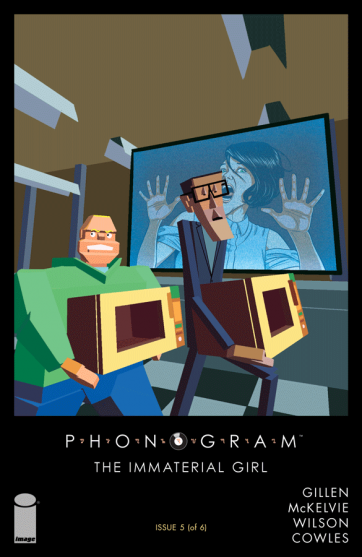 Ultimate End #5

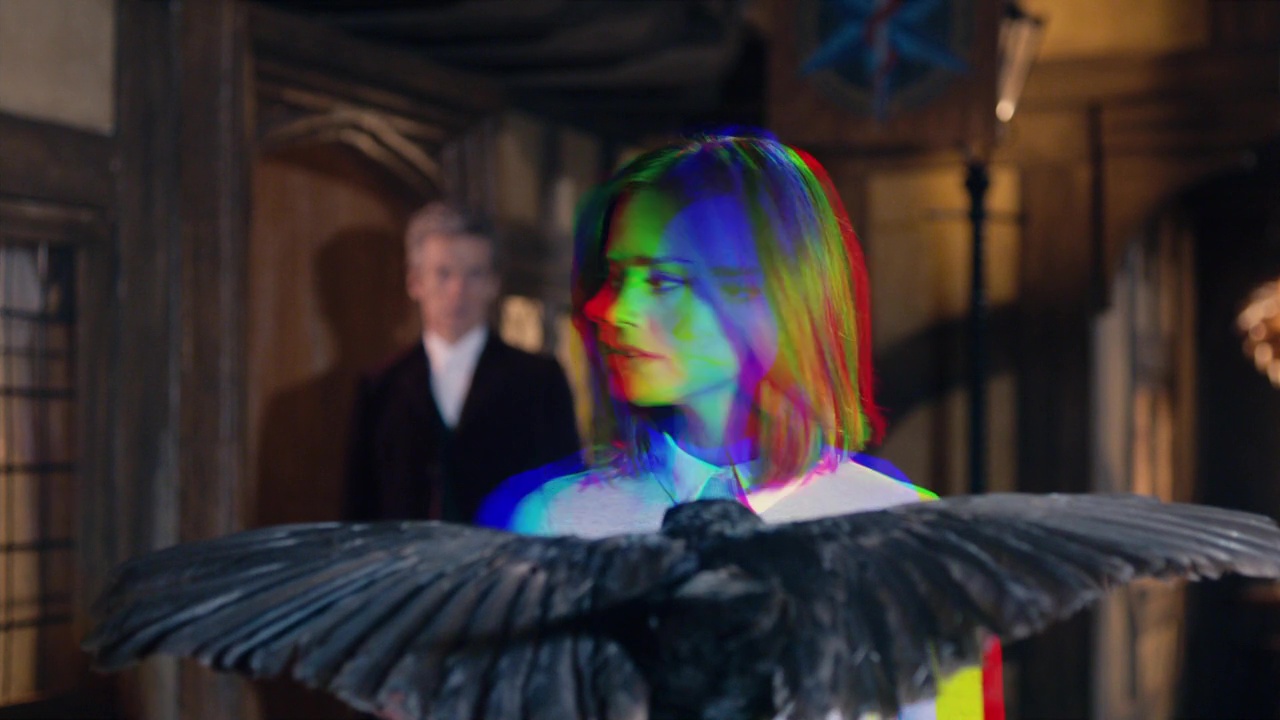 I was not as entranced with Series Nine as I’d hoped, but that may well be due to events in my own life and the kind of work that’s been on my plate this fall. I realize I haven’t written nearly as much about the show as I have in years past. So, this is to kind of rectify that, somewhat, and to encapsulate my thoughts on the series as a whole, and particularly in the context of Clara’s overall arc in the show.
 Like many structuralists, Chatman begins along the lines of Russian Formalism by distinguishing two aspects of narrative. The Russians used the terms “fabula” (the actual events of a narrative) and “syuzhet” (the organization of those events); Chatman uses “story” and “discourse,” but in a much broader sense, with “story” encompassing events, character, dialogue, setting (the “stuff” or “contents” of a narrative) and “discourse” including all the different ways the narrative is “told” – not just the organization of the text, but the narration of it as well. Cinematically, “discourse” would also include camera angles, cuts, lighting cues, the soundtrack, and things of that nature.