“Ingress”: Birthright, Part I

It could only happen on Deep Space 9.
It’s been called “the season of taking risks” by the production team. But Star Trek: The Next Generation was born capable of taking risks-Its mistake was in forgetting for so long that it was capable of doing so. It’s only now when the Enterprise has rediscovered what its place in the cosmos has always been, and it does so by voyaging here. Commander Sisko came to the Celestial Temple and Deep Space 9 to uncover the journey he was meant to take. The crew of the Enterprise come here to remember and be reborn again. But in turn, Deep Space 9 grows and is further sublimated through visiting with the Enterprise: Together, they are much more than they ever could be on their own. They belong together. They belong here and now.
The idea of doing a crossover between Star Trek: The Next Generation and Star Trek: Deep Space Nine is such an intuitive one it writes itself. There are no two iterations of this franchise that mesh and blend together quite as well as these do: Star Trek: The Next Generation and Star Trek: Deep Space Nine are a part of each other’s existence in a way that’s not true of any other Star Trek. Deep Space Nine opens up with the straightforward declaration that it’s a part of The Next Generation-Its opening moments literally take place in a Next Generation episode, its entire setting is inherited from one and The Next Generation plays an integral role in the plot of “Emissary”. This isn’t like Doctor McCoy showing up for one brief scene in “Encounter at Farpoint”, Captain Picard and the Enterprise are actual essential aspects to that plot.
This is not to say that Deep Space Nine is merely a subset or subsidiary of The Next Generation, but rather to argue it was inevitable that Deep Space Nine would return the favour, and sooner rather than later. It’s silly to think there would never be crossovers, or even to think that crossovers aren’t going to be the actual *norm* from here going forward, because these two entities share their reality together in a very deep and profound way. A voyaging canoe is a community just as a village is, and just as a world is; there is no conflict between these concepts. The canoe and the village both symbolize the universe they are each a microcosm of: Each spirit, bringing with them their own talents and experiences, finds a role to fill through which we all can survive and grow. The canoe is the island, and the island is the world that we all share together.
So in the same way Star Trek: Deep Space Nine mirrors and compliments Star Trek: The Next Generation, “Birthright, Part I” mirrors and parallels “Emissary”.…
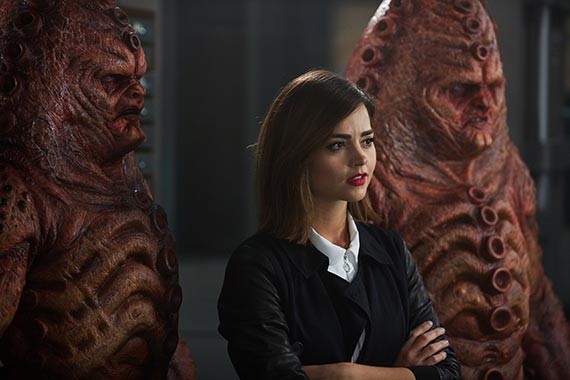 Holy shit that was good. An astonishingly well-tuned, clever piece of television full of surprises big and small. Every bit as good as you would hope from the writing credit, from the actors, from the directors, and really from Doctor Who. I am as thrilled to have watched this happen as I am jealous of those who got to see Terror of the Zygons on first transmission, and I have zero doubt that in 2055 fandom will talk about this like we talk about Terror today.
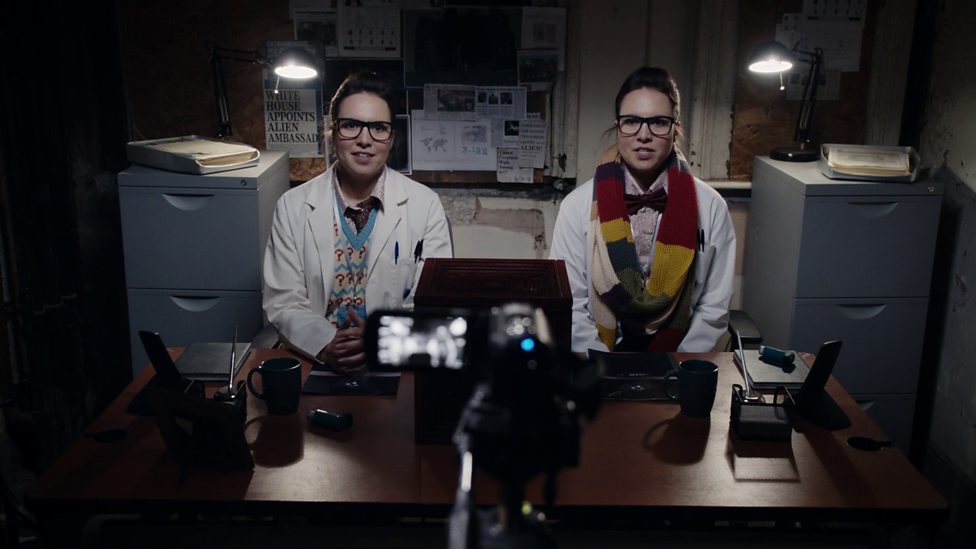 This week we’ve got a very special treat – a double length episode of the Series 9 Podcast in which I’m joined by comics writer Al Ewing, who co-wrote Titan Comics’ Eleventh Doctor comic, and is currently doing Contest of Champions, The New Avengers, and The Ultimates for Marvel. The first hour consists of us talking about The Zygon Invasion, while the back half is a wide-ranging interview about comics and numerous other topics. Yes, you read that right. Our podcast this week is like… a hybrid.
 I was there at the birth,
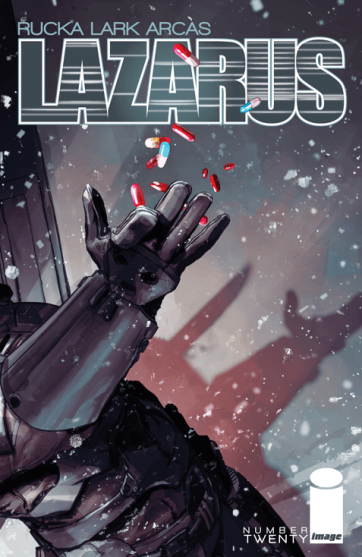 Uncanny X-Men #600
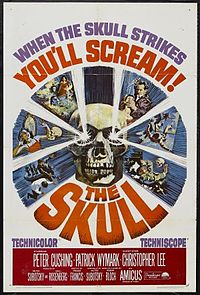 Holly Boson’s epic journey through the Amicus Films catalogue reaches the 1965 film The Skull, which features Christopher Lee, Peter Cushing, and the Marquis de Sade’s skull. One of these things is cursed. Holly is joined this time by Jack Graham. He is not cursed. We think.