
TARDIS Eruditorum Volume 8 Kickstarter
 At long and wearied last, it’s time for the Kickstarter for TARDIS Eruditorum Volume 8, covering the Paul McGann and Christopher Eccleston eras of the series. The Kickstarter is over here waiting to accept your money. The base goal is a somewhat higher than before $5000, largely because I’ve learned my lesson about shipping physical rewards. Also, there’s a lot fewer physical rewards. But all of this is technical shop talk, and this should be about publicity, so let me change hats and be a proper hype woman for myself.
This book will cover the two attempts to bring Doctor Who back—the ultimately disastrous US revival in 1996, and the massively successful UK one in 2005. It begins with a lot of hope and ends with a lot of hope, and everything in the middle is one of the most gloriously tangled messes in the history of the series, comprising multiple irreconciliable timelines, feuding lines, and a lot of very, very daft shit. If Volume 7 is a story about how to get cancelled and still be a triumph, Volume 8 is a story about how to score an absolutely massive and medium-changing hit television show despite doing literally everything wrong for nearly a decade.
And yet in that tangled web of errors there’s so much that’s fascinating. Works by Kate Orman, Jon Blum, Paul Magrs, Lloyd Rose, and Lawrence Miles abound. Paul McGann’s consistently deft performance that somehow works even when he’s sleepwalking through some of the most dire scripts Big Finish has ever written. And just a staggering amount of stuff that is so brain-meltingly weird that you wonder how on Earth anybody thought this was what you should do with Doctor Who.
As it stands, the book should include almost all of the blog posts from the McGann and Eccleston eras. (As with McCoy, there’s a few that were frankly filler to deal with the fact that three novels a week was an unsustainable pace, and I’m likely to cut those.) And then, with stretch goals, there are several more. The stretch goals are roughly organized in phases, proceeding thusly.
Through $7000, they add the Now My Doctor essays that sum up the respective eras of the television show. No Eruditorum Kickstarter has ever failed to hit this sort of tier, and I can’t imagine it’s going to be a problem this time. It’d be bizarre not to have these.
Starting at $8000 are a triptych of essays about the War Doctor era. Due to my continuing refusal to write new essays on Big Finish material, these will consist of a Day of the Doctor essay (almost certainly working in the novel this time), an essay on the book Engines of War, and a Now My Doctor essay. (Might I slip in an essay on the Eleventh Doctor comics run dealing with the War Doctor? No active plans to, but you never know.)
At $11,000, we get to the canon essays. These are big and fun. How Many Time Wars Were There?…
 shared the link, contributed to reaching the goals, or was just kind and supportive. This is quite literally life-changing for me. I can making a living off my passion without having to compromise financial security or my mental health. You people are amazing and I am indebted to you all. To be clear, $300 is a minimum though. I’m a disabled trans woman, and people will inevitably drop their pledges. Continued support would be great. But in the meantime, thank you. My life is better for your support.
  has been truly astounding. I cannot describe the thrill of waking up yesterday and realizing I would soon be able to live off my writing. The support of my community, the chance to fully dedicate myself to my craft, and not having to resort to a re-traumatizing job in order to survive makes for a tremendous feeling of support and gratitude. I cannot thank you all enough. You are amazing and have literally, materially changed my life.
 And so at last the story returns to where it began. Grant Morrison has, of course, been ever-present. As already discussed at length, his first professional credit predated Moore by five months. But he has been a shadow presence in the narrative, lurking at the edges, occasionally contriving to intersect it, waiting for his moment to take the stage in earnest. And now at last he arrives having always been here, and it becomes necessary to trace the story backwards, figuring out who he has been all this time.
 As a result, it is easy to overreach—to confuse historical event and inevitability. On a very basic level, whatever larger conclusions and patterns are inferred, the answer to how Grant Morrison achieved what he did and how he took up his role in the War is simple: he put a lot of work into writing comics that changed the world. This work did not exist in a vacuum; plenty of extremely talented people have worked just has hard to have an insignificant fraction of the insight. Nevertheless, to treat Morrison’s career as some historically deterministic phenomenon that extended out of Alan Moore’s actions would be an egregious error.
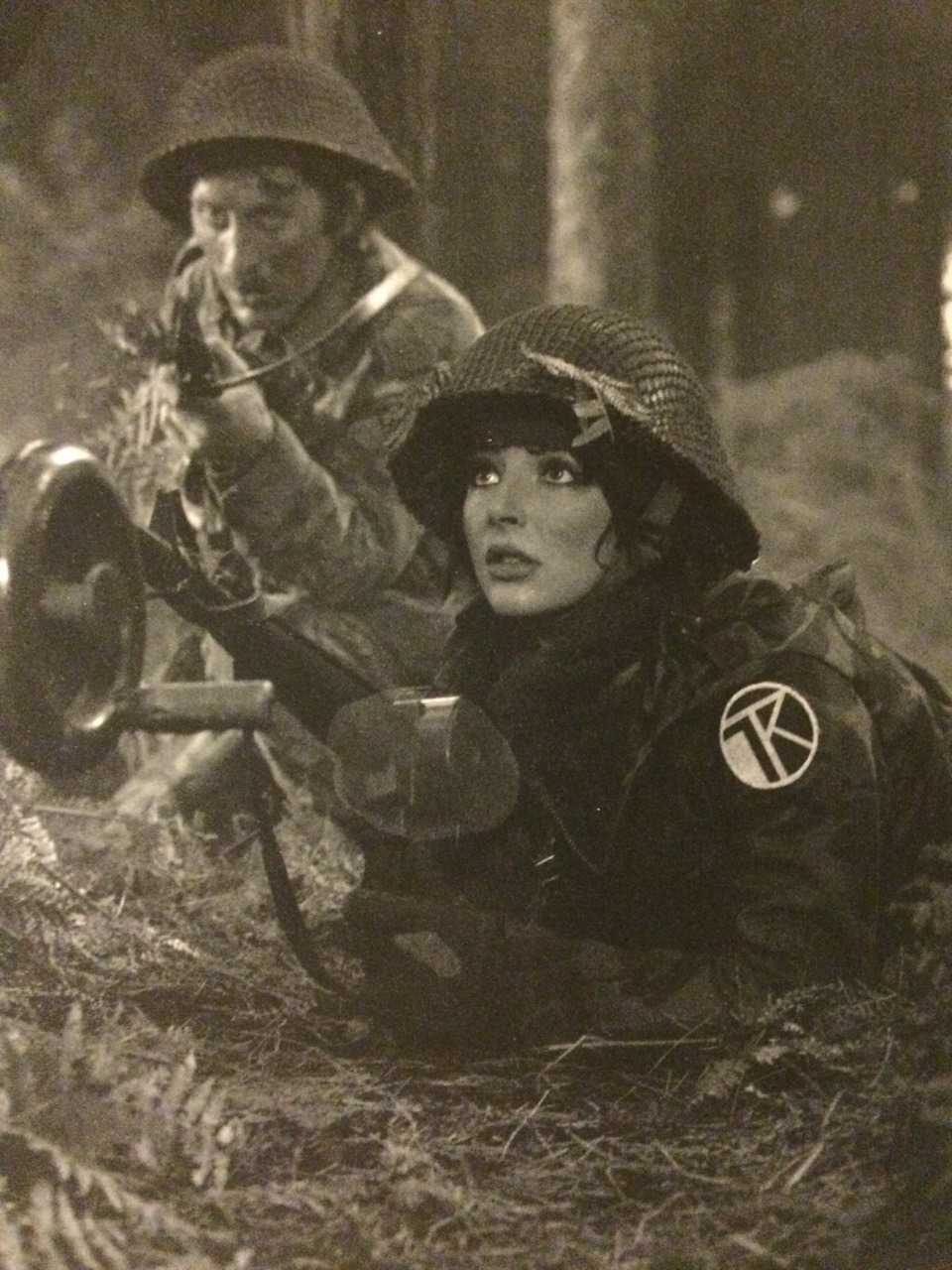 she keeps absolutely killing it, I thought it would be a good idea to put her back on the site.