You Were Expecting Someone Else: The Legends of Ashildr
 For all that we’ve been picking on the inadequacies of the standard book line, there had been efforts in the background to try new things. For a variety of reasons we didn’t cover efforts like Summer Falls and The Angel’s Kiss in the late Matt Smith era (actually just one reason, which was me saving things for the book), but they certainly represented one effort to change what the book line can and should do. The Legends of Ashildr represents a stab at another possible shape the books could take—anthologies of several short stories. Obviously there are some constraints around this. Just dumping a couple Doctor Who short story collections a year is an invitation for mediocrity with no obvious sales hooks. Whatever one might say about Big Bang Generation, it at least has a hook you can sell it with in a way that wouldn’t be true of a straightforward collection of shorts.
But what does work is grabbing gaps in the series and filling them with anthologies. So, for instance, when you have several hundred years of Ashildr/Me growing and developing as a character between the two halves of her debut you drop a collection of four stories filling in that gap. There aren’t necessarily a ton of things you can obviously do this with. There’s one other big one that we’ll get to towards the end of the era, and a few you could maybe imagining them doing something with that they didn’t (Osgood’s Zygon Adventures, Clara and Me, One Night on Darillium), though many of these start to get into a turf war with Big Finish who one assumes are absolutely dying for Maisie Williams and Jenna Coleman to have a spare weekend they can waste.
(A quick aside on terminology, since calling people by their preferred names is kind of a thing for me. The credits for episodes list Maisie Williams as playing “Ashildr” in all but The Woman Who Died. This broadly tracks with the Doctor’s inclination—he seems to passive aggressively call her Ashildr as part of his efforts at “redeeming” her. But, well, fuck that sideways with a Tissue Compression Eliminator. I don’t think this is quite a deadname situation, as it’s less rejection of having ever been Ashildr than a statement of having grown and changed, and so I do not have problems calling her Ashildr prior to her taking on her new name. As these stories keep calling her Ashildr even when doing internal narration [though note my concerns when we reach the final story], I’ll call her Ashildr in this entry, but she’ll be Me going forwards.)
But when the opportunity presents itself it’s a clear occasion for knocking together a book that’s got a little more freedom to try things and be interesting. With four stories, any of them have the liberty to take risks or display ambition because if they fail there’s three other ones to pick up the slack. There’s opportunities to give new writers a chance.…
_ash_sarkar_piers_morgan_-_youtube.png) “I’m a communist you idiot!” declared Ash Sarkar on Good Morning Britain, in response to the heckling and strawmanning of Piers Morgan. (
“I’m a communist you idiot!” declared Ash Sarkar on Good Morning Britain, in response to the heckling and strawmanning of Piers Morgan. (
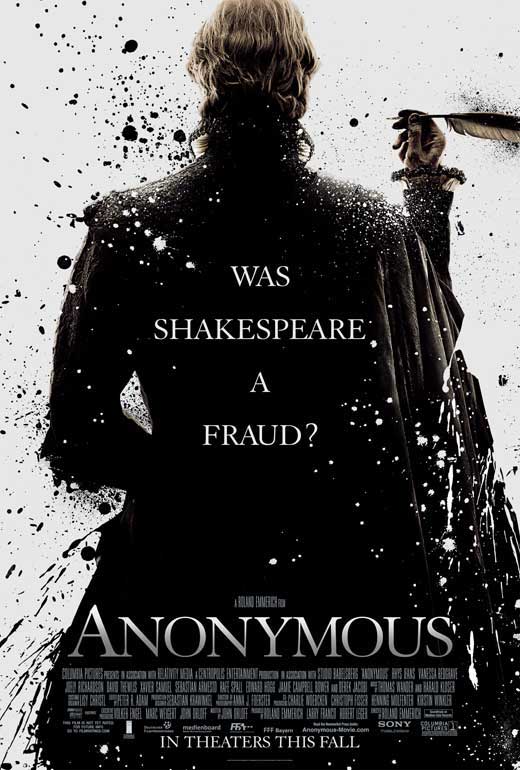 This time, Jack indulges his unhealthy obsession with Anti-Stratfordianism, and forces James, Kit, and Daniel to watch Roland Emmerich’s 2011 self-funded passion-project Anonymous.
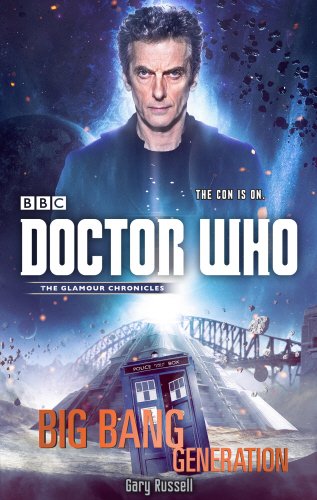 Books like this always pose something of a problem for the project. On the one hand, a book like this, in which Peter Capaldi’s Doctor goes on an adventure with Bernice Summerfield, is irresistible to a project like this. Once I discovered it existed there was literally never a point where I considered not covering it. The new series intersecting with the Wilderness Years at the point where it’s about to come as close to niche interest as it has been allowed to. The possibilities are vast. Except, of course, for the other hand, which is that it’s by Gary Russell. I ranted a bit in the Blood Cell entry about the inexplicable failure of spinoff media to move beyond the same handful of names who have been around since the Wilderness Years, many of them firmly among the B-list of that era. But Gary Russell takes this to another level, or rather several of them. For one thing, he’s been around far longer than the Wilderness Years, having been a prominent figure in Doctor Who at least since his 1984 Doctor Who Magazine review that described Warriors of the Deep as, and I quote, “a flawless story.” While this can probably be chalked up to the magazine’s official editorial policy of “please Mr. Nathan-Turner can we have some more,” it also proves a distressing augury of his own talents. His novels tend to ostentatiously fill high profile gaps—he’s written Liz Shaw’s departure, Mel’s first appearance, and Colin Baker’s regeneration—but to have little ambition for doing so beyond ticking the relevant boxes, and generally a few more to boot.
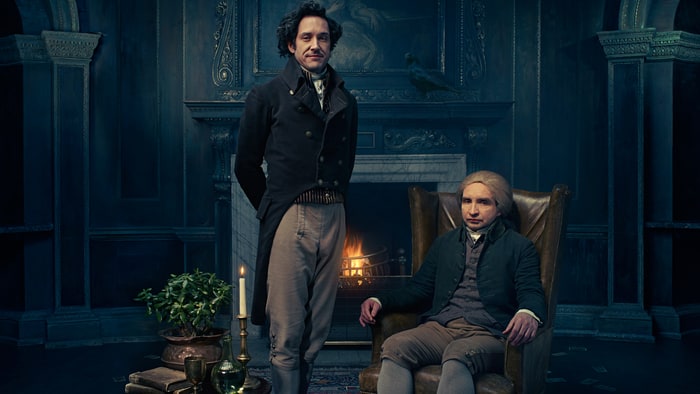 I’m not going to faff about pretending the justification for this involves Peter Harness’s chances of someday showrunning Doctor Who. I mean, I’d obviously love if that happened, but I don’t expect it (or think that we’re in a place to talk about who should succeed Chibnall yet anyway). No, the reason I’m picking this as our stopover reality between Last Christmas and the start of Series Nine is more idiosyncratic: having declared Harness’s debut the best Doctor Who story ever, I feel obliged to keep a bit of track of his work.