
Fromm Frankfurt With Love (Part 2)
 Part 1 can be found here.
*
The religious world is but the reflex of the real world. And for a society based upon the production of commodities, in which the producers in general enter into social relations with one another by treating their products as commodities and values, whereby they reduce their individual private labour to the standard of homogeneous human labour – for such a society, Christianity with its cultus of abstract man, more especially in its bourgeois developments, Protestantism, Deism, &c., is the most fitting form of religion.
– Marx, Capital vol.1, Chapter 1, Section 4
It is an historical irony that, though they today seem to embody a view of life dear to the moralistic Right, the Puritans were the ‘Left’ in the great political debates of the era of the European transition from feudalism to capitalism. But, while ironic, this is hardly accidental. They were expressing the views and imperatives of the rising class of bourgeois, this class being both product and inheritor of what is now the capitalist system. This is, of course, the very market system the Austrians (and those like them, because they are by no means as distinct as they might like to think) are committed to defending as ‘moral’.
In the essay from which we have been drawing, ‘Nietzsche’s Marginal Children’, Corey Robin quotes Hayek saying:
Freedom to order our own conduct in the sphere where material circumstances force a choice upon us, is the air in which alone moral sense grows and in which moral values are daily re-created.
Ironically, for all his ostensible rejection of authority, Hayek is revealed as subscribing to the Protestant Misery Ethic, and for very good historical reasons which (in yet another delicious irony) are revealed by the Marxist class-based view of the Reformation and the rise of capitalism.
Robin also quotes Hayek thus:
So long as we can freely dispose over our income and all our possessions, economic loss will always deprive us only of what we regard as the least important of the desires we were able to satisfy. A “merely” economic loss is thus one whose effect we can still make fall on our less important needs…. Economic changes, in other words, usually affect only the fringe, the “margin,” of our needs. There are many things which are more important than anything which economic gains or losses are likely to affect, which for us stand high above the amenities and even above many of the necessities of life which are affected by the economic ups and downs.
A fascinating paragraph, which reveals staggering complacency amongst other things. He essentially disregards either the existence or the moral sentience of those portions of the human race who can never regard economic losses as “merely” anything.
Meanwhile, Hayek’s loathing of government intervention (at least in the interests of the propertyless) stems from this idea of values, ends, and morals. Government’s interference to make provision can only deprive us of the choice of ends and means to pursue on the market, and thus of our opportunity to create subjective values (what we value highly, what is lowly, etc), and thus of our very capacity to be moral.…
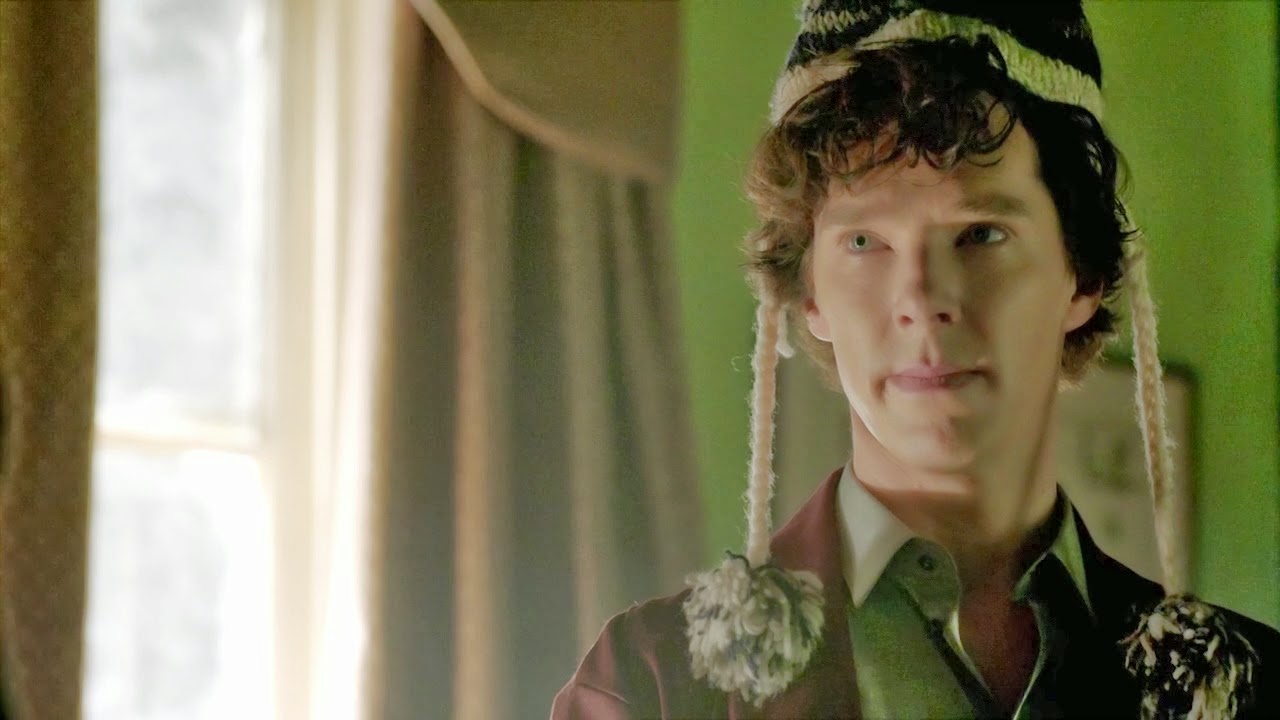 It’s January 1st, 2014. Pharrell Williams’s “Happy” has unseated Sam Bailey at number one, while Eminem and Rihanna, Lily Allen, Ellie Goulding, Katy Perry, and One Direction also chart. In the news, since Matt Smith got old and died it’s been exceedingly quiet. Obama signed a budget deal, marijuana was legalized in Colorado, incandescent light bulbs became illegal to sell in the United States, and Latvia adopted the Euro. While on television, Sherlock informed the audience that it was going to lie to them, and then went on to do just that. It had, in the tradition of fair lies, given ample warning. “It’s a trick. Just a magic trick.” And so, of course, it was. Indeed, The Empty Hearse is in effect a ninety minute exercise in arguing that the question of how Sherlock survived The Reichenbach Fall is irrelevant, or at least largely uninteresting.
 Yes, it’s the long-awaited (by a tiny number of people) return of the Shabcast.
 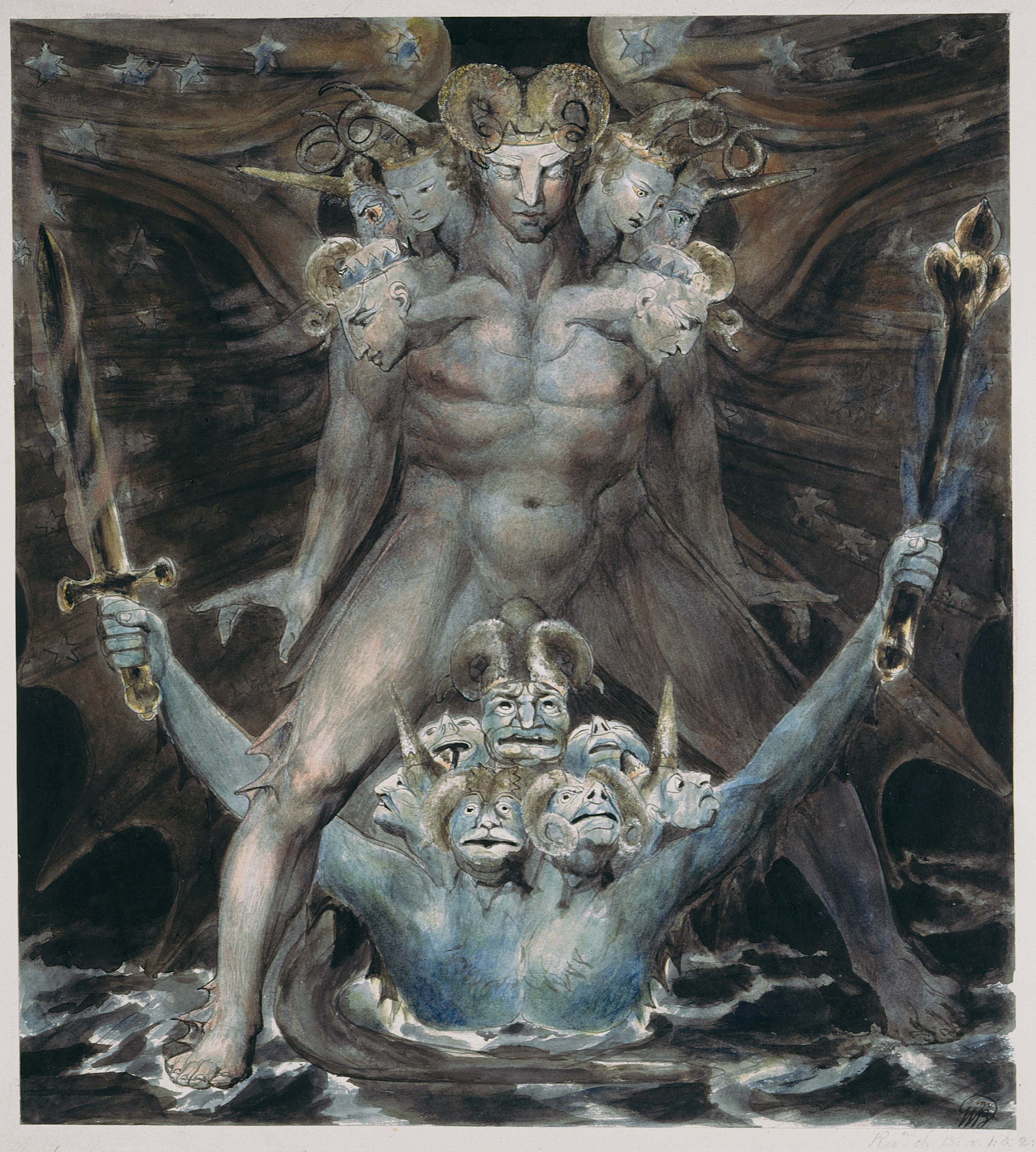 AND THE BEAST FROM THE SEA: The one painting in the series not to have a direct representation or invocation in the series. The tense sexuality that exists between the Dragon and the Sun-Clothed Woman is replaced here by a raw homoeroticism—a theme that is not entirely uncommon in Blake. (c.f. Object 47 of Milton a Poem) The Beast from the Sea appears in Revelation 13, one verse after the Dragon, and is said to be given his power by the Dragon, creating a sense of heritage or supplanting. In Blake, the Beast rises below the Dragon, but has clear dominion over him. Of course, that’s always how supplantation begins.
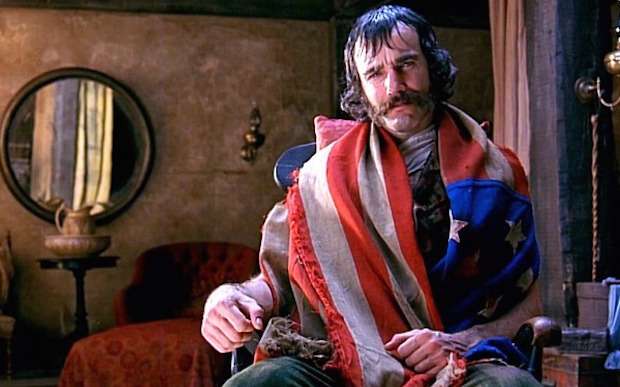 How do you do fellow kids?